
How fast can you deploy after a flood or storm in Fayetteville?
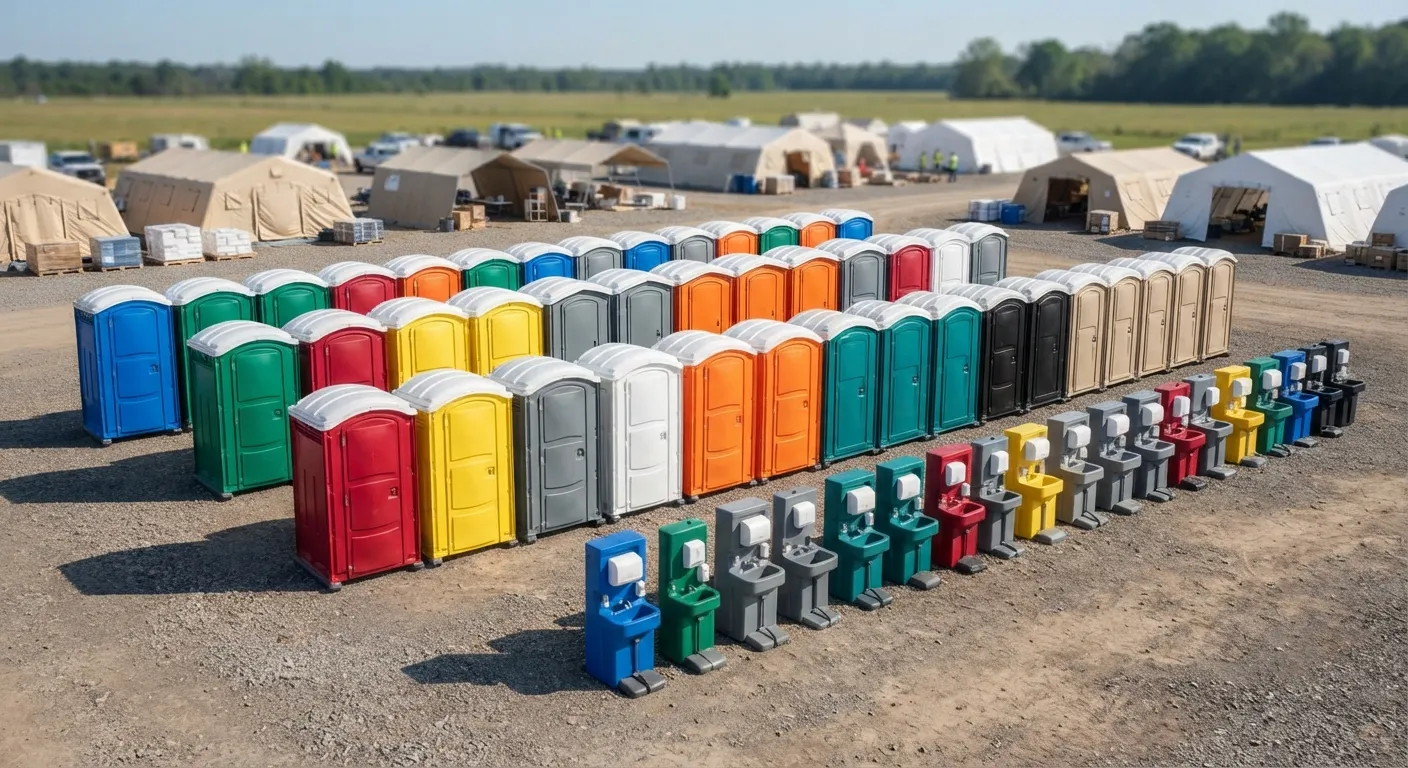
Speed depends on road access and how many units the shelter or command post needs. For a single-family situation or a small church shelter, we can usually get a standard porta potty rental out same day. For larger deployments, a shelter housing dozens of displaced residents, we pull from portable restroom rental stock and add handwashing station rental units so people have both toilets and a place to wash up. OSHA 1926.51(c)(1) sets the baseline ratio construction crews use: one toilet for 20 workers or fewer, then one toilet seat and one urinal per 40 people from there up to 200. Disaster shelters are not construction sites, but that ratio is the honest starting point when nobody has done a headcount yet. If the shelter is at a fairground or gym with a hard floor, ADA Standards section 302.1 calls for stable, firm, slip-resistant ground, which matters when trucks are driving over wet grass to make a delivery. We also bring ADA accessible porta potty units, since disaster populations include people who cannot use a standard step-up unit, and ADA Standards section 213.2 requires at least one accessible unit in any cluster, five percent minimum once the cluster grows.
Access matters more than most people expect. A roll-off dumpster rental truck needs about 60 feet of straight clearance behind the truck to set a container, and after a storm that clearance is often blocked by downed limbs or parked emergency vehicles. We coordinate with whoever is running the site, county emergency management, a church, a school, so trucks are not fighting traffic that is already stretched thin.
What sanitation do disaster shelters and staging areas actually need?
Shelters need toilets, handwashing, and a way to get debris off site, in that order. Toilets first: a portable toilet rental with a standard 60 to 70 gallon holding tank handles heavy use better than people expect, but service intervals matter more during a disaster because usage spikes. ANSI/PSAI Z4.3 sets one service visit per week for up to 10 users over a 40 hour week as the baseline, and that interval gets compressed fast when 50 people are sharing three units around the clock. We adjust service frequency up, not down, for shelter deployments.
Handwashing is not optional. 29 CFR 1910.141(d)2 requires soap and towels or a hand-drying device at wash stations, hand sanitizer alone does not satisfy it, so our portable sink rental units come stocked with both. If cleanup crews are dealing with contaminated water or applying disinfectants, OSHA 1926.51(f)(1) requires washing facilities for anyone handling coatings, herbicides, insecticides, or similar contaminants, which comes up often in flood cleanup where mold treatment chemicals are in use.
Debris removal is the third leg. Storm damage generates ruined drywall, flooring, furniture, and yard waste fast, and a construction dumpster rental or two keeps a staging site from turning into a dump itself. We also field calls for storage container rental units when relief organizations need secure space for donated supplies, water, blankets, generators, on site rather than trucked in daily.
| unit | day | week | month |
|---|---|---|---|
| standard | $100-350 | $130-500 | $125-325 |
| dumpster | $51-112 | $426-778 | $500-778 |
| ada | $200-400 | $240-400 | - |
Why does site setup matter more during a disaster response?
Setup speed and placement decide whether the sanitation plan actually works once people show up. A temporary fence rental around a staging area keeps foot traffic organized and keeps kids away from generators and dumpsters, and OSHA 1926.202 requires barricades that meet ANSI D6.1 wherever they are protecting workers. If crews are working after dark, and disaster response often runs overnight, a light tower rental matters as much as the toilets, since OSHA 1926.56(a) sets minimum illumination levels for active work areas. Power is usually the first thing to fail, so a temporary power pole with GFCI protection under OSHA 1926.404(b)(1)(ii) keeps electrical risk down when everything is wet.
We serve Fayetteville directly, and we can reach Johnson about 5.1 miles north or Farmington 6.6 miles southwest just as fast if a shelter opens outside city limits. For septic backup at a shelter running on a private system, our septic pumping service crews handle emergency calls, and if a tank is already failing, our septic tank warning signs guide covers what to watch for before it becomes a crisis. Check service areas for the full coverage map.
How many toilets does a 100 person shelter need?
Using the OSHA 1926.51(c)1 construction ratio as a floor, 100 people need roughly three toilet-and-urinal combinations, though shelters skew toward more toilets and fewer urinals given mixed demographics. We usually recommend rounding up and adding one ADA unit regardless of headcount.
Can you deliver on short notice during an active emergency?
Yes. Same-day delivery is common when roads are passable, and we prioritize shelters, medical staging, and emergency command posts ahead of routine rentals. Call ahead so we can route around blocked streets.
Do you provide handwashing stations separate from restroom units?
Yes. Our handwashing station rental and hand sanitizer station rental units deploy independently, which matters when a feeding station needs handwashing but restrooms are set up elsewhere on the site.
What happens if flooding blocks a delivery route?
We reroute and communicate delays rather than guessing. Our drivers know Fayetteville's terrain, and we coordinate with site contacts to find an alternate access point before attempting a blocked route.
Will you work directly with emergency management or a shelter coordinator?
Yes. We take direction from whoever is running the site, whether that is county emergency management, a church, or a shelter operator, and we adjust unit counts and service frequency as headcount changes.
Next step
Get a delivery date
Tell us the address, the dates and the headcount. We size the order and confirm the route.