
What do I need for restrooms on a farm?
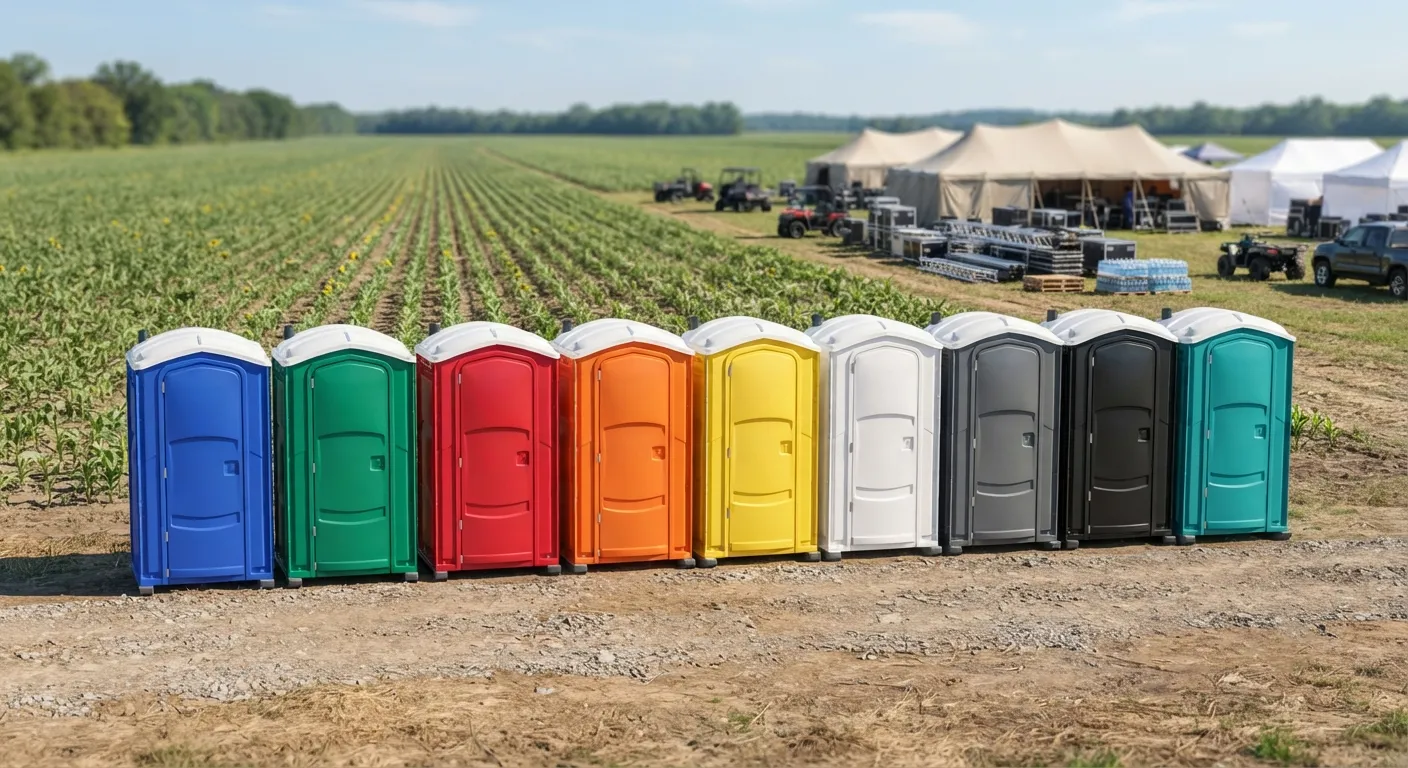
Start with the headcount. OSHA 1928.110 sets the baseline for hand-labor agricultural work: one toilet and handwashing setup per 20 employees, reachable within a quarter mile of wherever people are working that day. On a spread-out property that might mean two or three standard porta potty rentals staged at different fields instead of one bank of units by the barn. A standard unit measures about 44 by 48 inches on the ground and stands roughly 92 inches tall, so it fits on a trailer bed or a mowed pad without needing much clearance. Pair it with a handwashing station rental or a portable sink rental, since 29 CFR 1910.141(d)2 requires soap and towels or a hand-drying device wherever handwashing is provided. Hand sanitizer alone does not satisfy that. If your operation also runs a packing shed or processing area with employees rather than just field crews, general sanitation falls under OSHA 1926.51(c) instead, which is worth checking against our OSHA portable toilet requirements guide before you order. Farmington sits 6.6 miles southwest of Fayetteville and Johnson is 5.1 miles north, so delivery across most farm ground in the county is a short haul, not a special trip.
How many units does a farm operation actually need?
Match units to the crew, not the acreage. A five-person crew working one field satisfies OSHA 1928.110 with a single unit inside that quarter-mile radius. A forty-person harvest crew split across three fields needs three separate setups, each within its own quarter mile, because the rule is about walking distance, not a farm-wide total. Our how many porta potties do I need page walks through the math in more detail if your crew size changes by season. For farms near Fayetteville running seasonal labor through spring planting and fall harvest, a monthly porta potty rental usually costs less over a full season than repeated short-term orders, and it means one delivery instead of several. If a unit needs to move with the crew as fields rotate, ask about relocation when you set up service; most farm accounts do this two or three times a season rather than leaving one unit fixed all year. Handwashing keeps pace with toilet count under the same standard, so figure one station for every toilet cluster rather than one for the whole property.
Do I need anything special for pesticide or chemical handling?
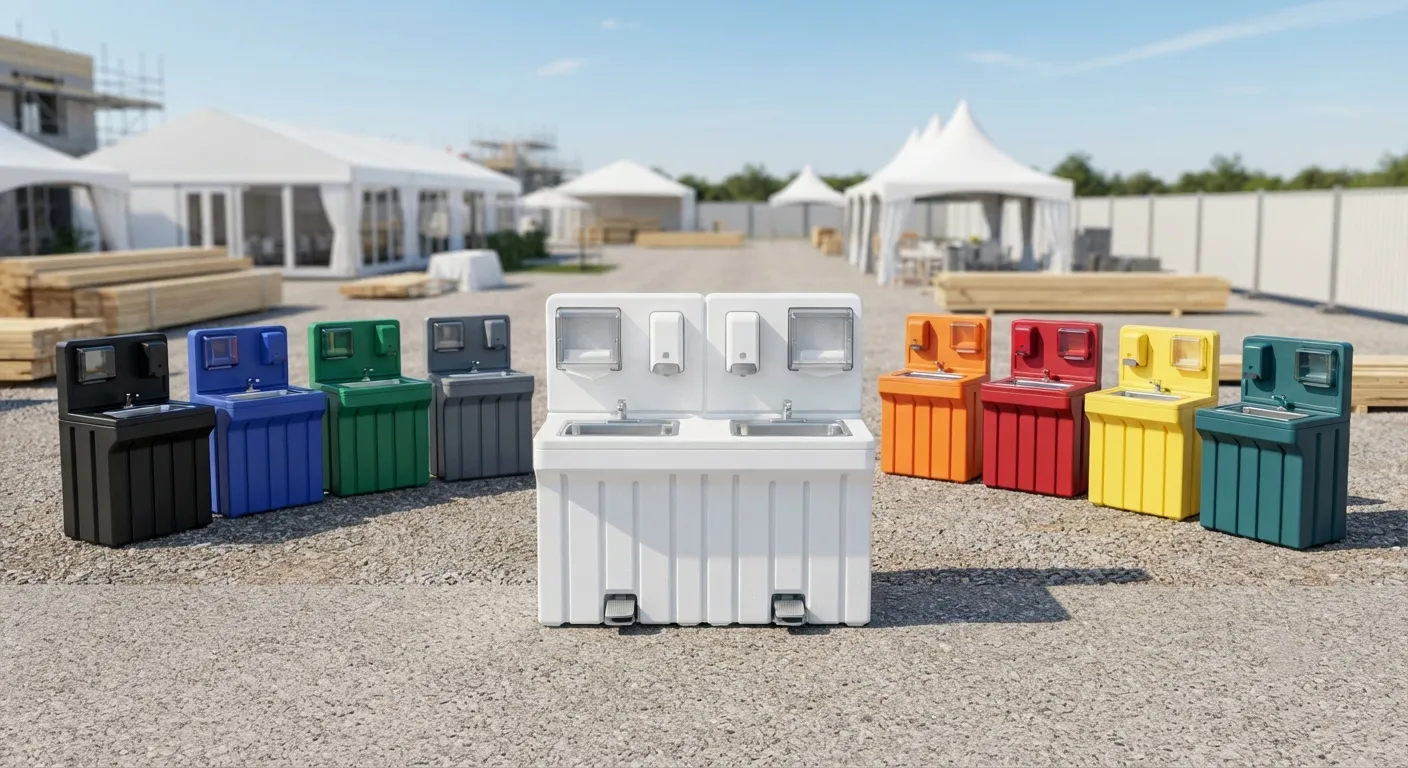
Yes, if your crew applies pesticides or herbicides, OSHA 1926.51(f)(1) requires washing facilities for employees engaged in that work, separate from the general field toilets. That standard covers paints, coatings, herbicides and insecticides specifically, not routine field labor, so it stacks on top of your regular restroom count rather than replacing it. A handwashing station rental placed at the mixing and loading area, away from the general-use units, keeps chemical exposure separate from everyday sanitation. Some operations add a second station near equipment wash-down for the same reason. If your farm runs a retail stand, agritourism event or corn maze alongside row-crop work, treat that as a separate use case: check festival restroom rental or county fair restrooms for guest-facing setups rather than crew sanitation, since public visitors need different placement and often an ADA accessible porta potty under ADA Standards 213.2, which requires at least 5 percent of clustered units to be accessible.
| unit | duration | typical price |
|---|---|---|
| standard | week | $200 |
| standard | month | $200 |
| delivery_fee | week | $100 |
Fayetteville farms booking multi-week harvest coverage often land in that weekly band; month-long placements for a full growing season track closer to the monthly figure. Check porta potty rental cost or porta potty rental per day if you need a shorter window instead. For septic needs on the homestead side of a farm property, septic pumping service and how often to pump a septic tank cover the tank itself, and a grease interceptor tied to any farm kitchen or food operation gets pumped once fats, oils, grease and solids reach 25 percent of liquid depth.
How far in advance should I book for harvest season?
Book as soon as you know your crew size, ideally a few weeks before the first hire shows up. Harvest season books up fast across Fayetteville and nearby Tontitown, 12.2 miles northwest, so late requests sometimes mean a shorter list of available unit types.
Can one unit serve workers across two adjoining fields?
Only if both fields fall within the quarter-mile walking distance OSHA 1928.110 sets. If the fields are farther apart, place a second unit rather than stretch the distance, since the standard is measured by walk, not by property line.
Do I need a permit to place a unit on farm land?
Placement on private farm ground generally does not trigger the same review as a public right-of-way, but confirm with the city if any unit sits near a road easement. See porta potty permit requirements for what to check first.
What happens to units in freezing weather?
Cold weather changes servicing needs and tank treatment. Our porta potty in winter guide covers what changes when temperatures drop during late fall harvest.
Can I add a shower trailer for a multi-week crew?
Yes, crews on-site for extended stretches sometimes add a shower trailer rental alongside restrooms. It is a separate unit from standard field toilets and priced differently.
Next step
Get a delivery date
Tell us the address, the dates and the headcount. We size the order and confirm the route.