
Why do porta potties smell?
Odor comes from the holding tank, not the plastic shell. A standard unit carries a 60 to 70 gallon tank, and once waste, chemical and paper mix past the halfway point, gas builds and pushes back up through the seat when it's warm outside. Heat speeds this up, so a unit on an August jobsite in Fayetteville will smell faster than the same unit in Johnson, 5.1 miles north, in March. Ventilation vents on the roof help move that gas out and away from the door instead of pooling inside. Placement matters too: a unit dropped in full sun near a loading dock will run warmer all day than one tucked in shade, which is one reason our porta potty placement guide exists. Usage count matters as much as heat. A single standard rental serving 30 workers a day fills and off-gasses faster than the same unit serving 8. If you are estimating headcount against OSHA guidance, our how many porta potties do I need page walks through the math before you commit to a unit count.
How often do porta potties need servicing?
Weekly service is the baseline under ANSI/PSAI Z4.3, which sets one visit per week for up to 10 users across a 40 hour week as the standard interval. A crew of 25 on a Fayetteville framing job blows past that baseline fast, and the tank needs pumping twice a week or more to stay ahead of odor. Event rentals work differently: a wedding block booked through event restroom rental usually gets serviced once before guests arrive and again after, since the whole run is under 48 hours. For a longer build, a monthly porta potty rental should have a fixed pump schedule written into the contract, not a call-when-full arrangement. Farms and hand-labor crews fall under a different standard: OSHA 1928.110 requires field sanitation facilities within a quarter mile walk, serviced often enough to stay usable through a full shift. If you're renting for a home project, our home renovation porta potty page covers what a reasonable pump interval looks like for a two-week tear-out.
Can a deluxe or trailer unit control odor better?
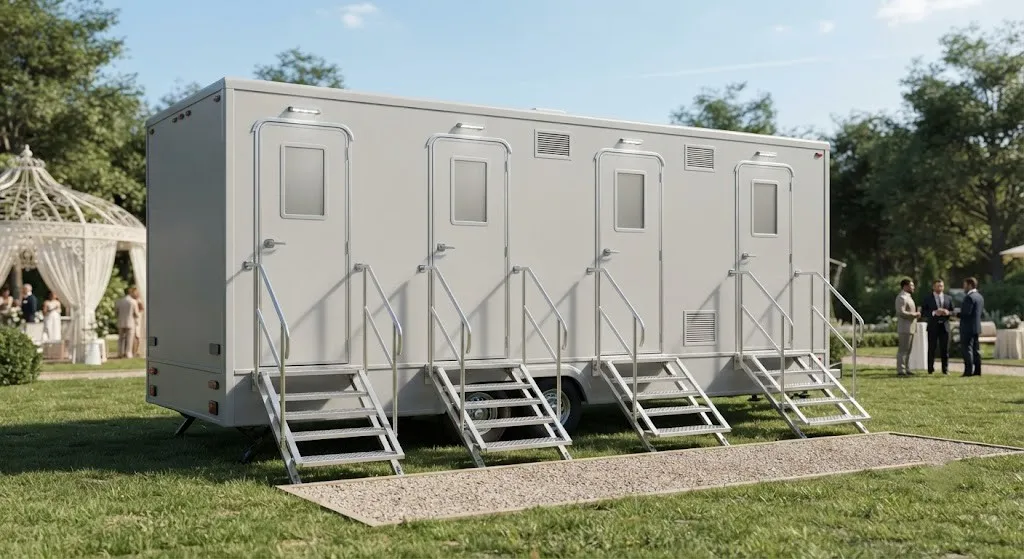
Yes, flush units and trailers cut odor because they separate waste from the air you breathe faster than a standard chemical tank. A deluxe flushable porta potty uses a small freshwater flush, which pushes waste down and seals it off between uses instead of letting it sit exposed under the seat. A restroom trailer rental goes further, with real plumbing and a separate holding tank vented outside the stall. For anything with a guest list, a 2 stall restroom trailer or 4 stall restroom trailer keeps the experience closer to indoor plumbing than a standard unit ever will. Events booking a luxury restroom trailer for a wedding at a Fayetteville venue get climate control on top of that, which matters more than people expect since heat is the biggest driver of tank odor. None of this replaces service frequency. A trailer that skips its pump-out schedule still backs up, and the restroom trailer rental cost reflects the extra plumbing, not a lower service need.

Does regular handwashing reduce odor complaints?
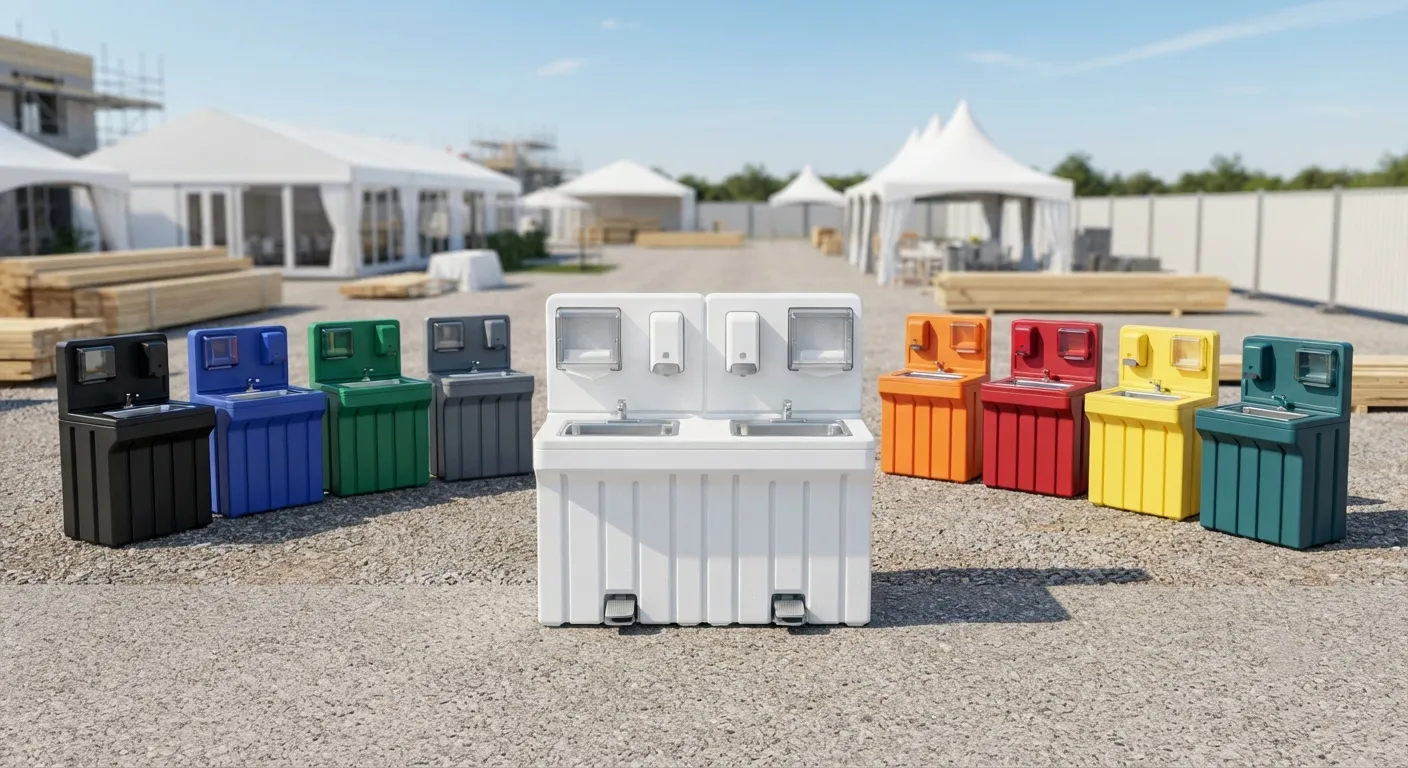
Not directly, but it changes what people notice. Handwashing stations required under 29 CFR 1910.141(d)(2) need soap and towels, since hand sanitizer alone doesn't satisfy the standard, and a clean-smelling wash station next to the toilet changes how people rate the whole setup. Pair a handwashing station rental or portable sink rental with your toilet order and complaints usually drop even if the tank odor is unchanged. For sites where paint, coatings, herbicides or insecticides are in use, OSHA 1926.51(f)(1) requires washing facilities specifically for those contaminants, separate from general sanitation coverage under OSHA 1926.51(c). Fayetteville contractors running both a paint crew and a general labor crew often need both standards covered on one site, which is worth checking against handwashing requirements before the job starts. A fresh water supply, required generally under OSHA 1926.51(a)(1), also keeps hand sanitizer stations from being the only option on site.
Do all porta potties smell the same?
No. A standard chemical unit smells more than a deluxe flush model or a trailer, because chemical units rely on deodorizer sitting in a static tank instead of moving water. Heat, usage count and days since the last pump-out matter more than the brand or the unit itself.
How much does extra servicing cost to cut down odor?
Standard rentals run 100 to 350 dollars a day depending on term and service frequency, with weekly rentals from 130 to 500 dollars. Adding a mid-week pump-out beyond the standard schedule is usually a small add-on fee, not a full rebook. Ask for it in writing on your quote.
Will a porta potty smell worse in summer?
Yes. Warm air speeds up gas buildup inside the tank, so a unit that was fine in April can smell strong by July in Fayetteville. Shade placement and a shorter service interval both help. See porta potty in winter for how the opposite season changes things.
Can I request extra deodorizer instead of more pump-outs?
You can ask, but it's a short-term fix. Deodorizer masks smell for a day or two; it doesn't reduce tank volume. For a crew working full weeks, a tighter pump schedule solves the problem longer than any additive.
Do ADA units have the same odor issues?
Yes, same tank, same chemistry. An ADA accessible porta potty is larger inside to meet the 60 inch turning circle under ADA Standards 304.3.1, but the holding tank and service interval work the same as a standard unit.

Next step
Get a delivery date
Tell us the address, the dates and the headcount. We size the order and confirm the route.