
How Much Does Septic Tank Pumping Cost?
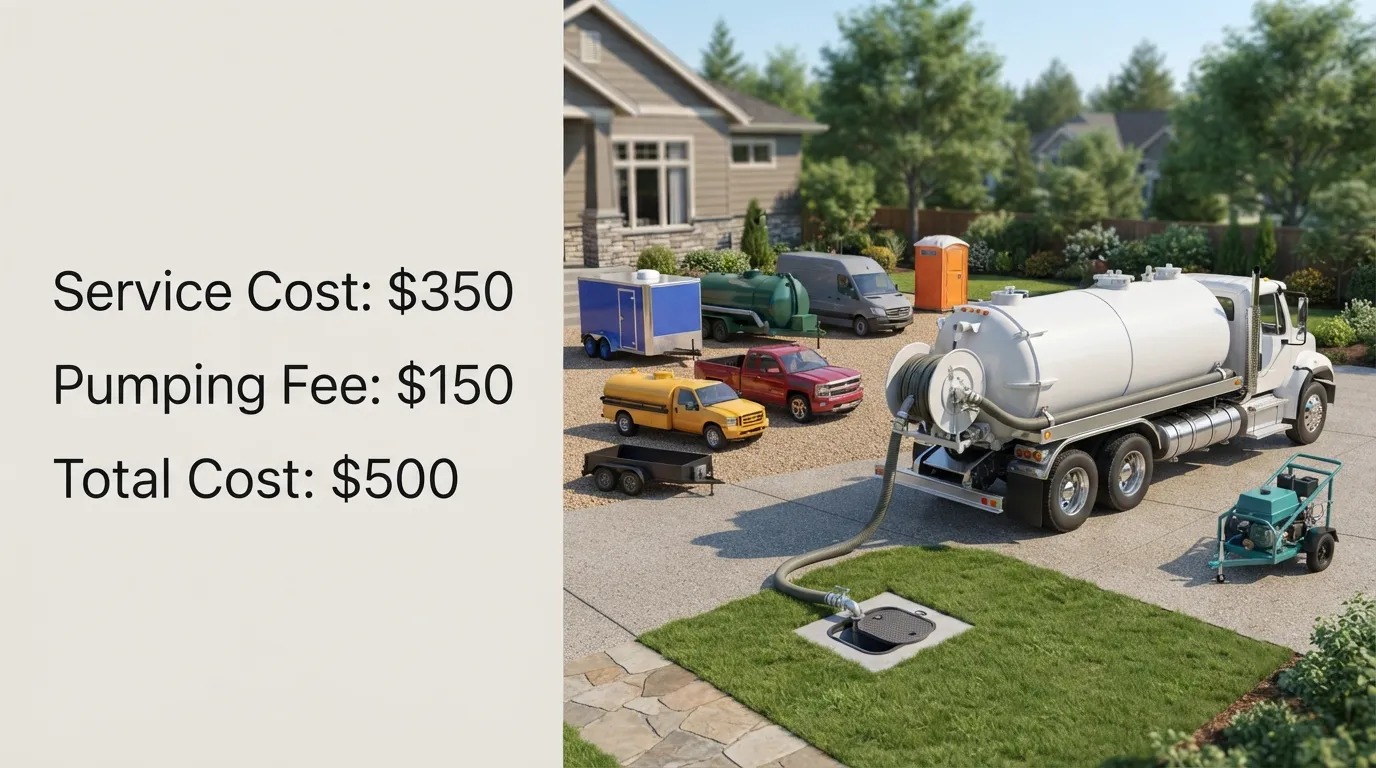
Most homeowners pay somewhere in the $150 to $300 range for a single pumping visit, based on measured pricing across the market. That is the septic day rate, not a weekly or monthly figure, since pumping is a one-time service call rather than a rental. Weekend calls run cheaper per visit, in the $50 to $150 range, which surprises people who expect weekend work to cost more. If your driveway is tight or the tank sits under a deck, expect the higher end. Distance matters too. A crew driving from Fayetteville out to service areas near Farmington, 6.6 miles southwest, or up toward Johnson, 5.1 miles north, is a short trip either way, so travel rarely drives the price by itself. What drives it is tank size, sludge depth and whether the crew has to dig to find the lid. If you are weighing a full system evaluation instead of just a pump-out, our septic pumping service page walks through what a service call includes beyond the truck showing up.
How Often Should a Septic Tank Be Pumped?
A typical residential septic tank needs pumping every 3 to 5 years, and that interval is driven by tank size and household size, not a fixed calendar date. A larger household with a smaller tank pumps more often than a small household with an oversized tank. If you are not sure where your system falls, our page on how often to pump a septic tank breaks down the variables in more detail. Waiting too long costs more later, because solids that should have been pumped out start clogging the drain field, and drain field repair is a different cost category entirely from a pump-out. Watch for slow drains, gurgling pipes or a soggy patch over the tank. Those are covered on our septic tank warning signs page. If your system backs up before your scheduled service, emergency septic service is available, and pricing there tends to sit at the higher end of the day-rate band because of the rushed timing.

What Is Included in a Septic Tank Cleaning Price?
A septic cleaning price covers locating and opening the tank, pumping the liquid and solid waste, and a basic visual check of the baffles and tank walls. It does not usually include drain field work, tank repair or riser installation unless you ask for it. Some companies quote a flat day rate and others break the ticket into a service fee plus a per-gallon charge, so ask which model you are getting before the truck rolls. If your property runs a grease interceptor instead of a standard septic tank, the FOG rule is different: those get pumped once fats, oils, grease and solids reach 25 percent of the liquid depth, not on a fixed schedule. Our grease trap pumping page covers that separately, since restaurants and commercial kitchens run on a different service rhythm than a household tank. For a full breakdown of what drives the number up or down on a residential job, see septic tank pumping cost for the wider cost picture, and septic tank cleaning for the service itself.

Does Fayetteville Require a Permit for Septic Pumping?
Permit rules for septic work vary by situation, and Fayetteville Porta Pros always recommends confirming placement and permit questions directly with the city before scheduling, since we have not verified a specific local ordinance for this page. What we can tell you: if your property needs a temporary holding tank while the system is serviced or repaired, that is a different rental entirely from a pump-out, and our holding tank rental page explains how that works. Construction sites and events have separate sanitation rules that do carry a citation. OSHA 1926.51(c)(1) sets toilet counts for construction crews, and OSHA 1928.110 covers field sanitation for agricultural labor, including a rule that facilities sit within a quarter mile walk. Neither applies directly to a residential septic pump-out, but if your property also runs a construction project or a farm operation, those standards may apply to the sanitation setup on-site, separate from the septic tank itself.

How Do I Get an Accurate Septic Pumping Quote?
The fastest way to get an accurate number is to tell the company your tank size, how long since the last pump-out, and whether the lid is exposed or buried. A crew that knows those three things before arriving can usually quote close to the final price over the phone. Fayetteville homeowners comparing quotes should also ask whether the price includes disposal fees, since some companies quote pumping and disposal separately. If you are managing a larger property, like a rental with multiple units or a farm with farm and agricultural restrooms already on-site, bundling septic service with other site needs can simplify scheduling. You can request a quote directly, or check our septic tank pumping cost page again once you have your tank details in hand, since the number tightens up fast once size and access are known. For general questions about how we operate across Fayetteville, our about and contact pages have the details, and our FAQ page covers questions that come up across every service line, not just septic.
How much does it cost to pump a 1,000 gallon septic tank?
A 1,000 gallon tank is a common residential size and typically falls in the standard $150 to $300 day-rate band, depending on access and how long since the last service. Buried or hard-to-reach lids push toward the higher end.
How often does a septic tank actually need pumping?
Every 3 to 5 years for most residential systems, driven by tank size and household size rather than a fixed schedule. Larger households or smaller tanks need more frequent service.
Is septic pumping cheaper on weekends?
Yes, weekend septic visits run $50 to $150, lower than the standard day-rate band. That is unusual compared to most services, where weekend work costs more.
What happens if I wait too long to pump my tank?
Solids build up and start clogging the drain field, which turns a routine pump-out into a much bigger repair. Watch for slow drains or soggy ground over the tank.
Does a grease trap get pumped the same way as a septic tank?
No. Grease interceptors get pumped once fats, oils, grease and solids reach 25 percent of liquid depth, not on a calendar schedule like a residential tank.
Next step
Get a delivery date
Tell us the address, the dates and the headcount. We size the order and confirm the route.