What are the porta potty placement rules?
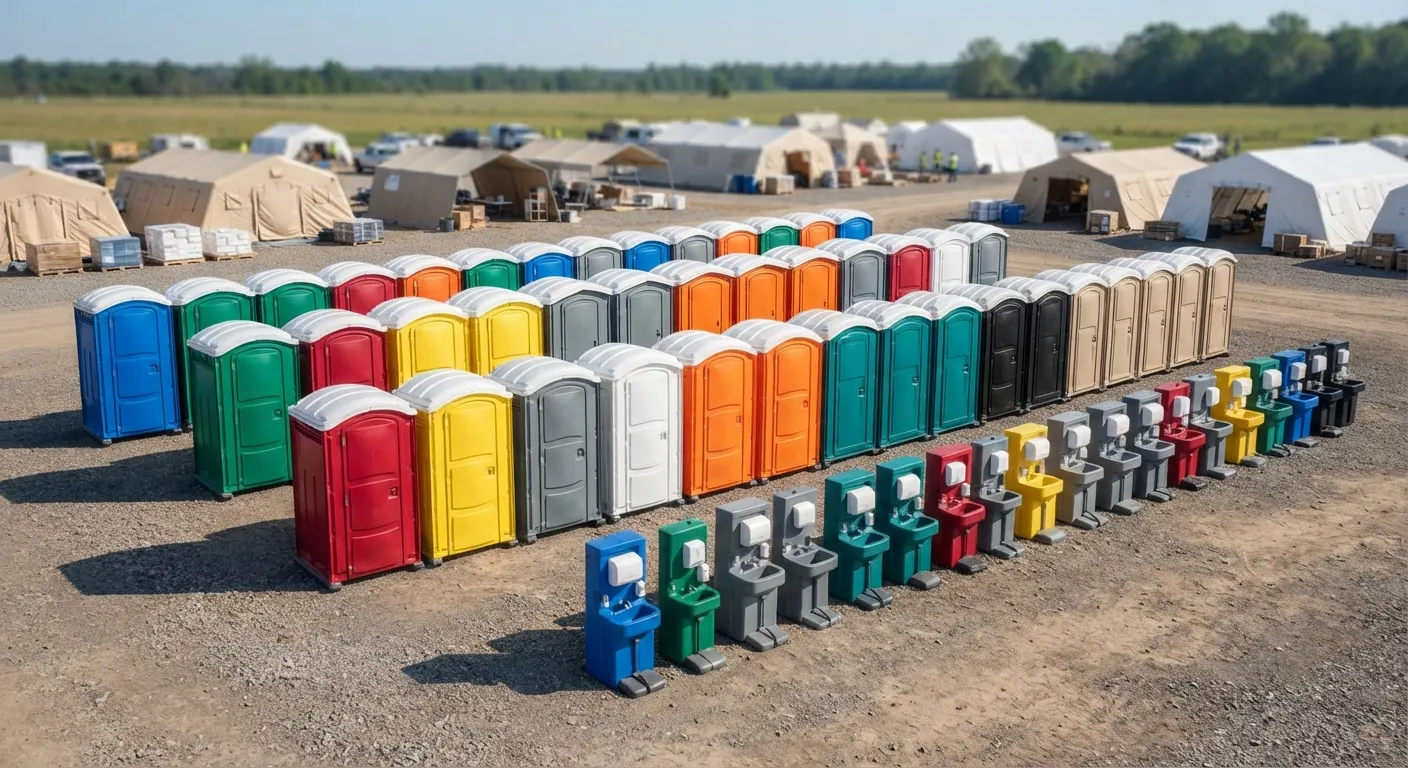
Ground has to be level and firm. ADA Standards section 302.1 calls for surfaces that are stable, firm and slip resistant, and that matters as much on a gravel lot in Fayetteville as it does downtown. A standard unit runs about 44 by 48 inches on the ground and stands 92 inches tall, so give it clearance from low branches and awnings. Keep it off slopes, away from catch basins, and out of standing water. If you're setting units for a job site, pair the placement decision with your standard porta potty rental order so delivery and layout happen in one call. For events, the same rules apply, just scaled up. Check our porta potty rental checklist before delivery day, and if you're unsure how many units your layout needs, the how many porta potties do I need guide walks through headcount math for job sites and gatherings alike.
Where should you place units on a construction site?
Put them close to the work, not the trailer. OSHA 1926.51(c)(1) sets toilet counts by crew size: one unit for 20 workers or fewer, then a seat and urinal per 40 workers up to 200. That means placement has to scale with headcount, not guesswork. Keep units within a short walk of active work zones, on ground rated for foot traffic, and clear of overhead lines and swing radius for equipment. Our construction site services page covers full-site setups, and the OSHA portable toilet requirements guide breaks the ratio down further. If you're stacking a roll-off dumpster rental on the same site, keep dumpster placement and toilet placement separate by at least the truck's swing path. A dumpster placement permit is sometimes required depending on where the container sits relative to the street, and dumpster placement permit cost varies by jurisdiction, so confirm with the City of Fayetteville before the container lands. Our dumpster permit requirements page has more on that question.
Can you place a porta potty in the public right of way?
Placement in the public right of way needs confirming with the city before you commit to a spot. Fayetteville has its own process for street-adjacent placement, and rules differ from what's used in nearby Johnson, five miles north, or Farmington, roughly six and a half miles southwest. Don't assume a curb-side spot is fine just because a neighboring town allows it. If your event or job site is near a sidewalk, a bike lane, or metered parking, call ahead. Our porta potty permit requirements page covers what to ask when you call, and our emergency porta potty rental team can move a unit fast if a placement gets flagged after the fact. For events downtown, pairing this with event restroom rental planning saves a second site visit.

How does ADA accessible placement work?
Accessible units need their own clear path. ADA Standards section 403.5.1 requires a 36 inch clear route to the unit, and section 404.2.3 sets minimum door opening width at 32 inches. Where portable units are clustered, ADA Standards section 213.2 requires at least 5 percent to be accessible, never fewer than one. Inside, section 304.3.1 calls for a 60 inch turning circle, and section 308.2.1 limits forward reach to 48 inches high and 15 inches low. Placement matters as much as the unit itself: a compliant ADA accessible porta potty crammed against a fence with no turning space isn't actually accessible. Our ADA restroom requirements page has the full list. If you're running a wedding or festival, see wedding restroom rental or festival restroom rental for layout advice specific to guest flow.
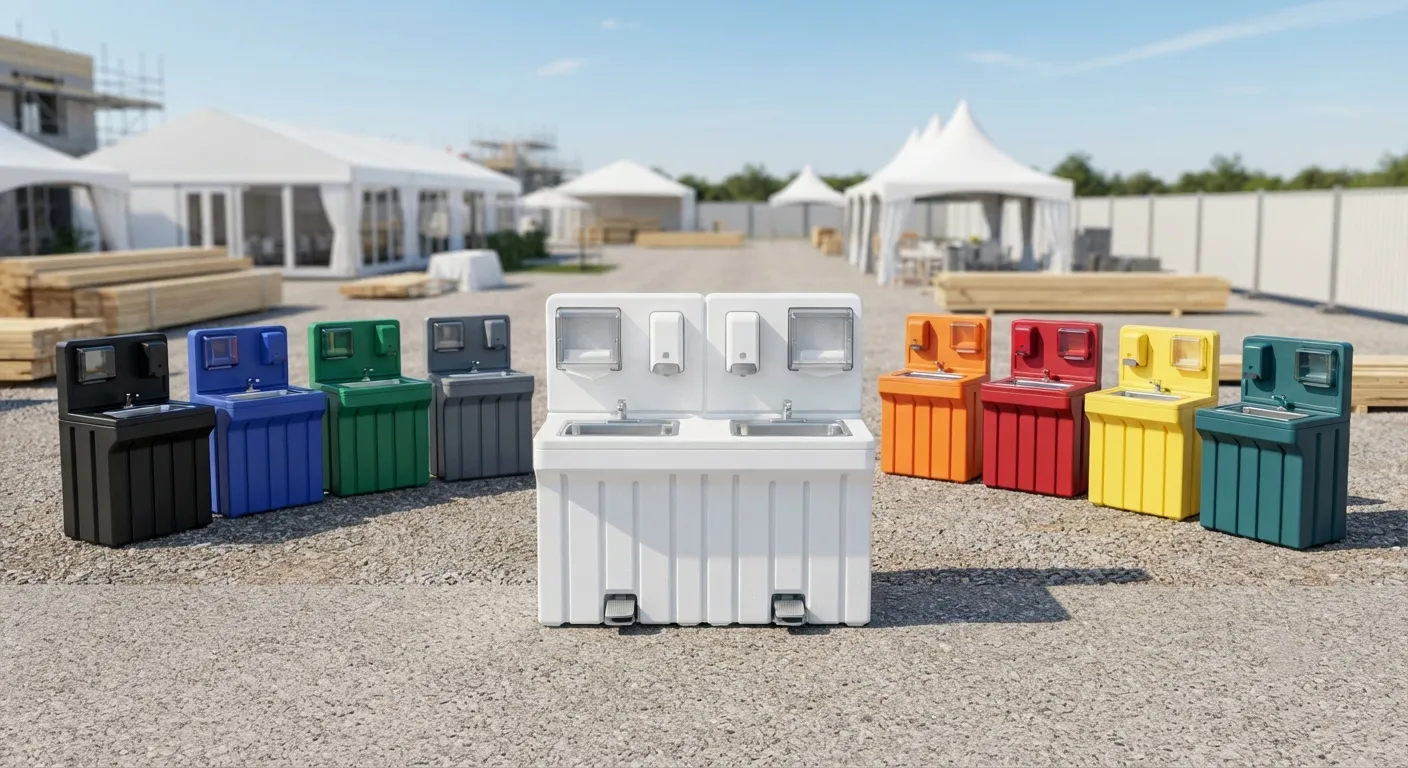
Beyond toilets, placement rules apply to other rented equipment too. A handwashing station rental needs to sit near food service or paint and coating work, since OSHA 1926.51(f)(1) requires washing facilities where employees apply paints, coatings, herbicides or insecticides. If you're running an ozark river portable sink and need parts, ozark river portable sink replacement parts are a separate order from us, not something we stock on the truck, so plan ahead. A mobile office trailer rental has its own placement needs too. Mobile office trailer replacement doors aren't something Fayetteville Porta Pros supplies directly, but we can advise on trailer pad prep and leveling when you book. Storage containers and temporary fence rental sections both need firm, level ground the same way toilets do, so treat the whole site plan as one layout problem, not four separate ones.
How far from a building does a porta potty need to be?
There's no single fixed distance in our fact set, so check with the City of Fayetteville for any building code offset before final placement. Keep the unit accessible for weekly service, per the ANSI/PSAI Z4.3 baseline interval, and clear of doors, vents and windows.
Does the ground need to be paved?
No. Gravel, packed dirt or pavement all work if the surface is stable and level, per ADA Standards section 302.1. Avoid mud, slopes and anywhere water pools after rain.
Can a porta potty go on a septic system's drain field?
Avoid it. Heavy units and service trucks can damage drain field lines. If you're due for septic tank service anyway, our septic pumping service team can check the field while on site, similar to how a placerville septic pumping service crew would flag it during a routine pump-out.
How much clearance does the service truck need?
Our trucks need clear approach and a flat parking spot near the unit for hose reach. Roll-off deliveries need about 60 feet of straight clearance behind the truck, and toilet servicing needs a shorter but similarly unobstructed path.
Who decides where units go on a permitted event?
The venue and the city both weigh in. Permit terms often specify setback and accessibility placement. Check with the City of Fayetteville early, and see our porta potty permit requirements guide for what documents to have ready.

Next step
Get a delivery date
Tell us the address, the dates and the headcount. We size the order and confirm the route.