
How many restrooms does a festival need in Fayetteville?
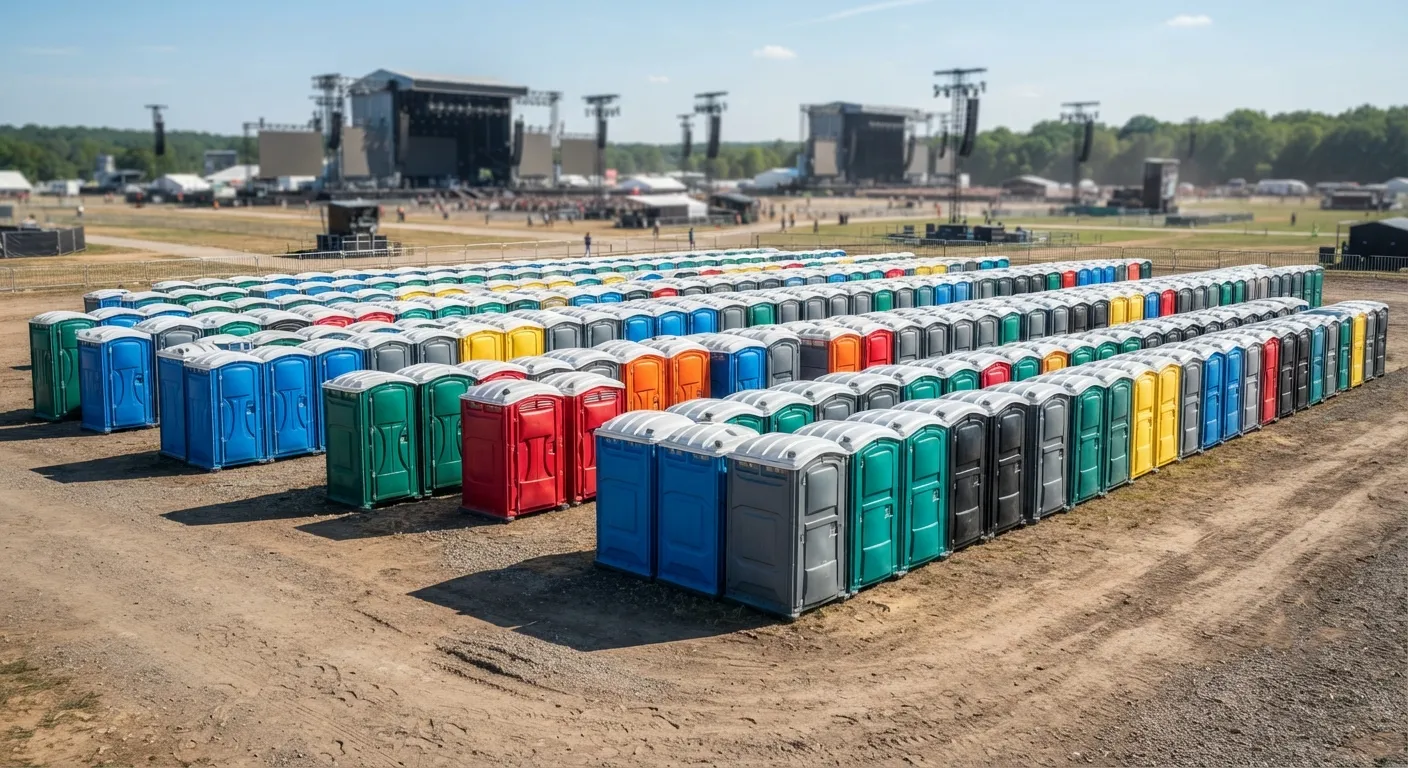
Start with attendance, not square footage. A single-day event with a few hundred people can run on a cluster of standard units, while a multi-day festival with vendors, beer gardens and late crowds needs more units and faster service intervals. ANSI/PSAI Z4.3, the portable sanitation service standard, sets one weekly service visit for up to 10 users over a 40 hour week as the baseline, which tells you why festival crowds need a shorter service cycle than that, not a longer one. Fayetteville Porta Pros scales service frequency up for weekend crowds instead of leaving units to sit. If you are not sure where the numbers land, our guide on how many porta potties you need walks through the math step by step, and the porta potty placement guide covers where units belong on your site map. Every cluster needs at least one accessible unit. ADA Standards section 213.2 requires that where single-user portable toilet units are clustered, at least 5 percent, and never fewer than one, must be an ADA accessible unit with a 60 inch turning circle per ADA Standards 304.3.1. For festivals expecting a big beer garden crowd or long lines after headliner sets, a step up to deluxe flushable units or a full restroom trailer keeps lines shorter and smells down. We serve festivals across Fayetteville and into nearby Johnson, about 5.1 miles north, and Farmington, roughly 6.6 miles southwest, so multi-site events spanning both towns are one delivery, not two contracts.
What restroom options work best for a multi-day festival?
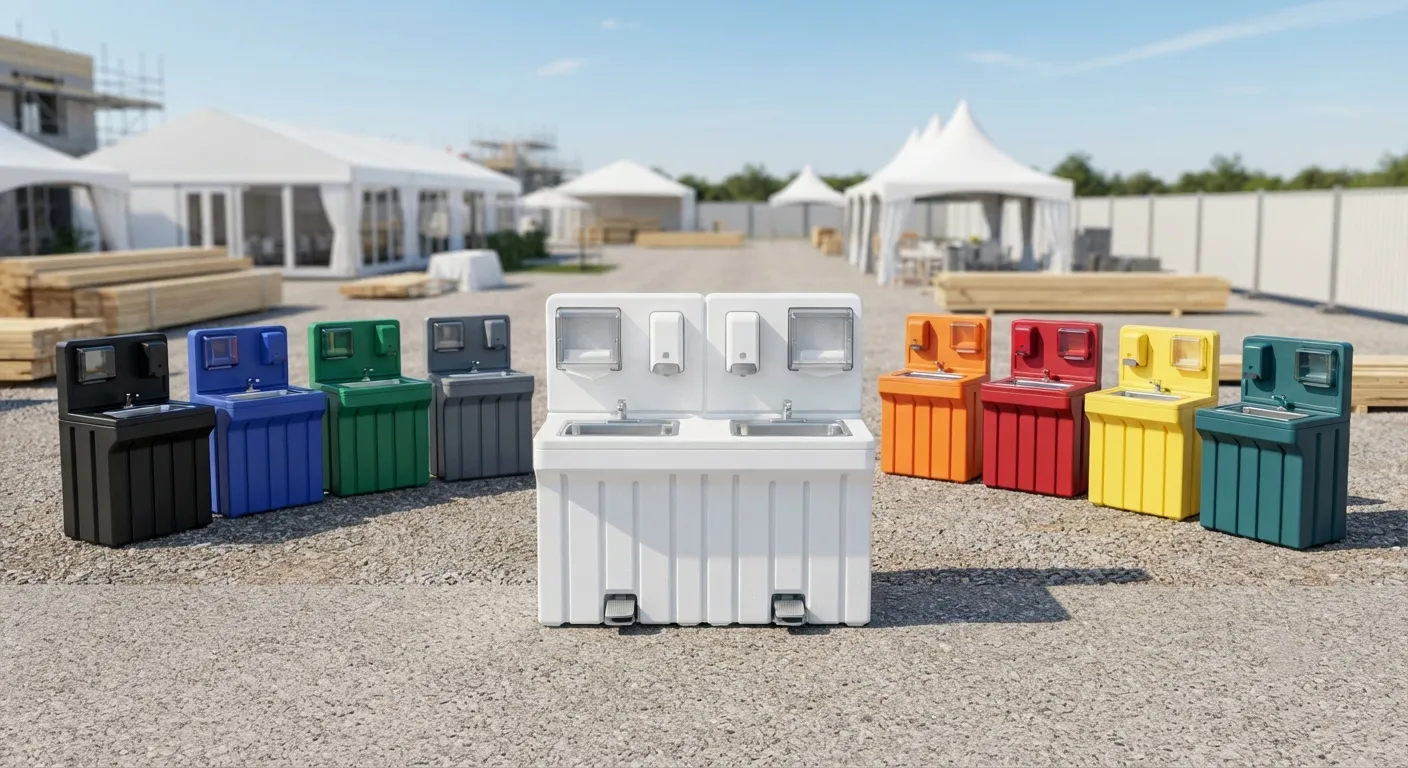
Multi-day festivals need more than toilets sitting in a field. A restroom trailer gives you real stalls, sinks and a door that opens to at least 32 inches per ADA Standards section 404.2.3, which matters when strollers and wheelchairs are moving through the same paths as foot traffic all weekend. The 2 stall, 4 stall and 8 stall trailers scale with headcount, and the luxury restroom trailer option works for VIP areas or sponsor tents. Standard units still earn their place near stages and food vendor rows where volume matters more than finish. Pair those with handwashing stations at every food and beverage area: 29 CFR 1910.141(d)(2) requires soap and towels or a hand drying device at washing facilities, and hand sanitizer alone does not satisfy that. If your festival grounds include a beer garden with fry stations or grills using oil, OSHA 1926.51(f)(1) requires washing facilities where paints, coatings or other contaminants are present, which covers heavier food service setups too. Add portable sinks near any cooking area rather than relying on sanitizer stations alone. For overflow storage of vendor supplies or staging equipment, a storage container or mobile office trailer keeps gear off the grounds and out of the walkway. Multi-day setups also mean overnight security concerns, so temporary fencing around restroom clusters and vendor rows helps control access when the grounds are unattended.
Where should restrooms be placed on a festival site?
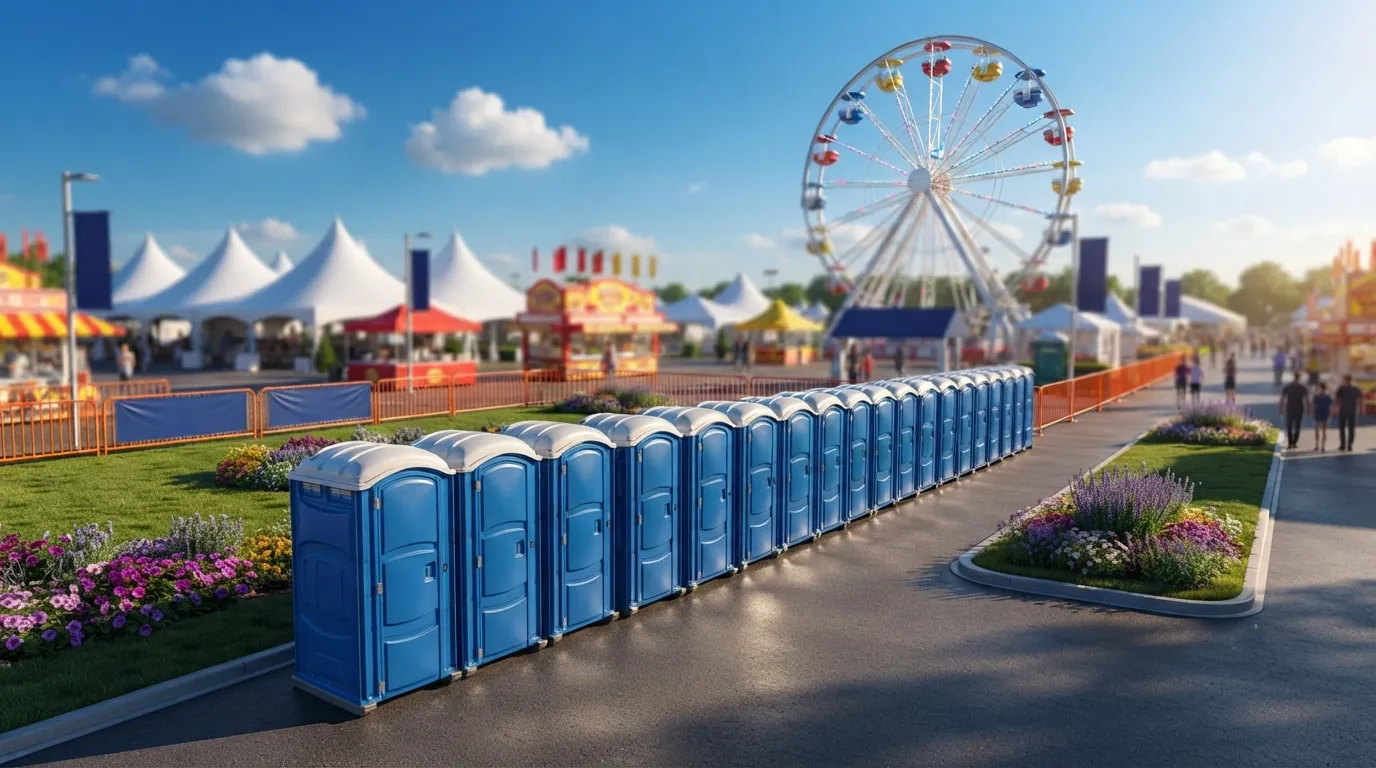
Placement decides whether restrooms work or become a bottleneck. Route access paths at least 36 inches wide per ADA Standards section 403.5.1, and keep the ground stable and slip resistant under ADA Standards section 302.1, since festival grounds get muddy fast once foot traffic and weather mix. Cluster units near stages, food vendor rows and any beer garden, but keep clear the fire lanes and any path a delivery truck needs, since a roll-off or trailer delivery needs about 60 feet of straight clearance behind the truck. If your festival straddles Fayetteville and reaches toward Tontitown, about 12.2 miles northwest, or as far as Bentonville, 25.7 miles north, plan delivery routes early so trucks aren't navigating festival crowds during setup. Lighting matters after dark: OSHA 1926.56(a) sets minimum illumination intensities for work areas, and applying that same logic to restroom clusters keeps patrons safe walking back from stages late at night. A light tower rental near restroom rows solves that without running permanent wiring. If your event needs power for food trucks or sound, a temporary power pole keeps GFCI-protected circuits, per OSHA 1926.404(b)(1)(ii), away from standing water near handwashing stations. Placement in the public right of way, if your festival footprint extends onto city streets or sidewalks, needs confirming directly with the City of Fayetteville before you finalize your site map.
How far in advance should I book festival restrooms?
Book as soon as your headcount and site map are set, ideally a few months out for multi-day events. Trailers and larger clusters get reserved fast during peak festival season. Contact Fayetteville Porta Pros or request a quote early to lock delivery dates.
Can I mix standard units and a restroom trailer at one event?
Yes. Many festivals put standard units near stages and food rows for volume, then add a restroom trailer or luxury trailer near VIP or sponsor areas. Mixing tiers controls cost while keeping premium areas comfortable.
Do festival restrooms need to be ADA accessible?
Yes. ADA Standards section 213.2 requires at least one accessible unit per cluster, or 5 percent of units, whichever is greater. See our ADA restroom requirements guide for full spec details on doors and turning space.
How often are festival restrooms serviced during a multi-day event?
More often than a weekly baseline. High-traffic festivals need daily or twice-daily service, well beyond the once-weekly ANSI/PSAI Z4.3 baseline built for lighter office use. Fayetteville Porta Pros schedules service around your actual attendance curve.
What happens if we need extra units added mid-event?
Call and we add units fast. Our emergency porta potty rental service covers festivals that underestimate crowd size or add a surprise headliner draw partway through the weekend.
Next step
Get a delivery date
Tell us the address, the dates and the headcount. We size the order and confirm the route.