
How does a porta potty actually work?
No plumbing, no tank fill, no flush handle wired to anything. The seat sits directly above the holding tank, and a trap door or simple opening lets waste drop straight in. A standard unit measures about 44 by 48 inches on the ground and stands roughly 92 inches tall, so it fits tight jobsite corners around Fayetteville without eating much space, and pricing for that footprint is covered on the porta potty rental cost page. Inside, a blue or green chemical mix breaks down solids and masks odor between services. That chemical is doing real work, not just perfume: it is formulated to knock down ammonia and slow bacterial growth in standing waste. For a construction worker porta potty setup, ANSI/PSAI Z4.3 sets the baseline service interval at once per week for up to 10 users over a 40 hour week, though busier sites often need more frequent pumps. Crews near downtown Fayetteville or a job site off Highway 71 both run on that same interval unless usage says otherwise.
How do flushable porta potties work?
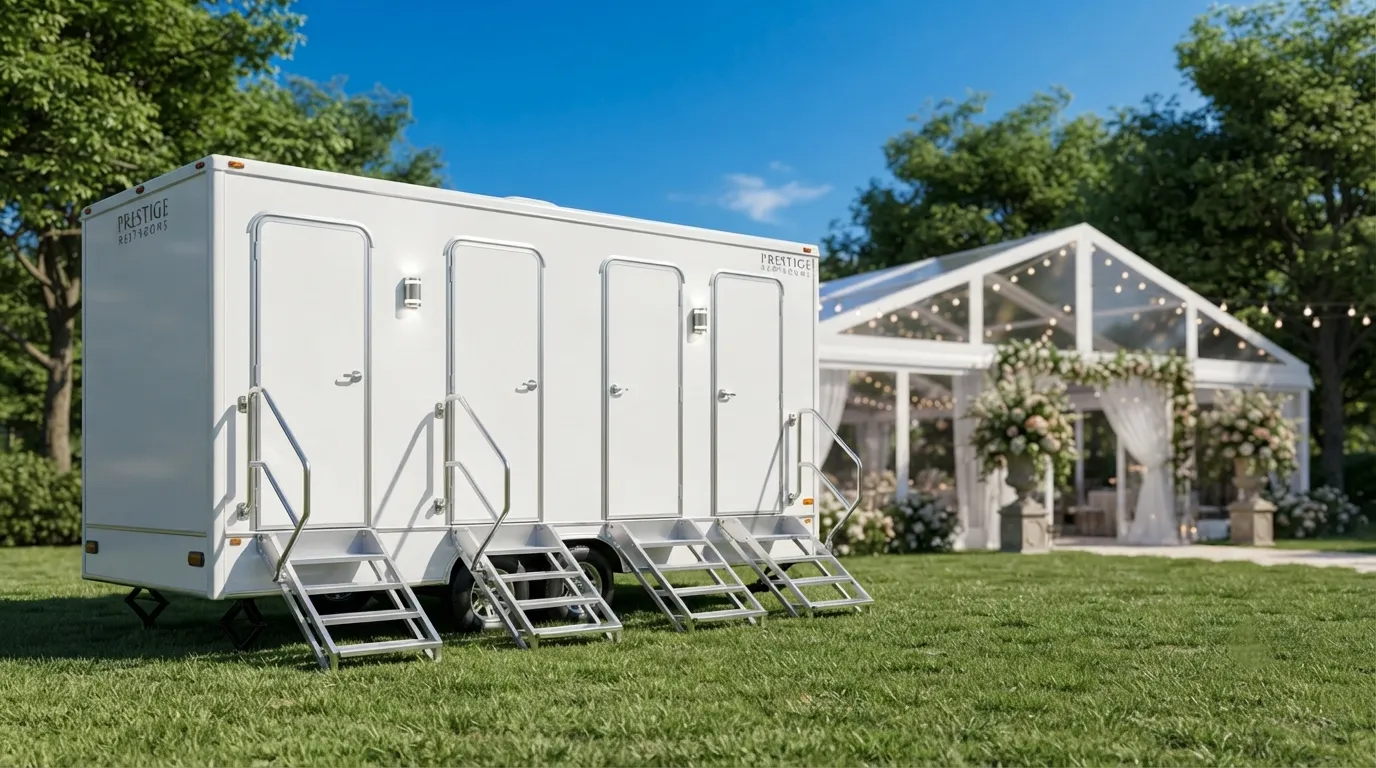
A deluxe flushable unit adds a small onboard freshwater tank and a foot pump or hand pump that pushes a measured rinse into the bowl after each use. It is not connected to a water line. The rinse water and waste both go into the same holding tank below, just like a standard unit, so the tank still needs regular pumping. What changes is comfort: less odor, less visible residue, closer to a household toilet. These units run higher than a standard rental, and for a private event, a wedding restroom rental, or an office trailer setup in Fayetteville, that upgrade often earns its keep. A restroom trailer takes this further with a real flush system tied to a fresh water tank and a separate waste tank, closer to indoor plumbing than any single unit can get.
How does a portable sink work?
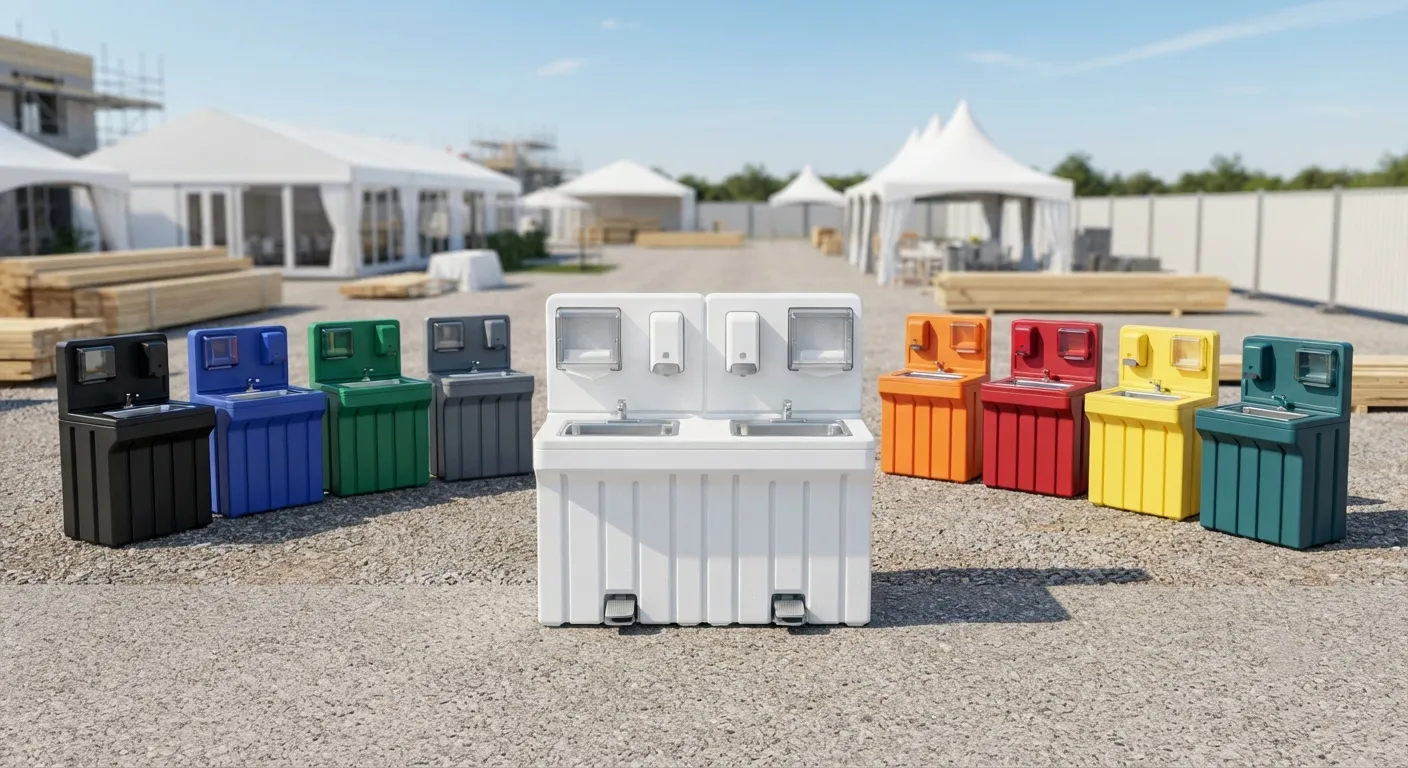
A portable handwashing station pairs a foot pump or hand pump with a fresh water reservoir and a separate gray water tank underneath. Step on the pedal, water moves from the fresh tank through the tap, and used water drains into the holding tank below rather than the ground. Soap dispensers mount on the unit itself. Under 29 CFR 1910.141(d)(2), washing facilities need soap and towels or a hand-drying device; a hand sanitizer bottle sitting on a table does not satisfy that. Sites doing painting, coating, herbicide or insecticide work fall under OSHA 1926.51(f)(1), which specifically requires washing facilities in those contaminant contexts, so a portable sink rental next to the porta potties is not optional there. General jobsite toilet counts instead follow OSHA 1926.51(c), covering ratios by crew size, a topic covered in full on the OSHA portable toilet requirements page.

Do camping porta potties work the same way?
Mostly yes, with one difference: portability. A camping porta potty uses the same holding tank and chemical breakdown, but it is sized and placed for foot traffic instead of vehicle access, so a delivery crew often carries it the last stretch by hand. Farmers and outfitters near Farmington, about 6.6 miles southwest of Fayetteville, use the same field-ready units for farm and agricultural restrooms work, where OSHA 1928.110 requires potable water, toilets and handwashing within a quarter mile walk of the work. Tontitown, 12.2 miles northwest, and Johnson, 5.1 miles north, see similar setups for agricultural and event work. Placement still matters: a flat, stable surface keeps the unit from tipping, and ADA Standards section 302.1 calls for stable, firm, slip-resistant ground wherever an accessible unit sits.

What is the difference between a porta potty and a septic tank?
A septic tank is a permanent underground system tied to a house or building's plumbing, while a porta potty is a self-contained, mobile holding tank with no pipe connection at all. A residential septic tank typically gets pumped every 3 to 5 years, depending on tank size and household size, and that job calls for a vacuum truck, not a chemical treatment. Septic tank cleaning chemicals marketed for home use can actually disrupt the bacterial balance a septic system relies on, which is different from the deodorizing chemical used inside a porta potty tank. If a Fayetteville property is showing backup or slow drains, that is a septic tank warning sign worth a call to a septic pumping service, not a porta potty question. Restaurants and commercial kitchens have a related but separate need: a grease trap gets pumped once fats, oils, grease and solids reach 25 percent of the liquid depth.
How often does a porta potty get serviced?
Weekly is the baseline under ANSI/PSAI Z4.3 for up to 10 users over 40 hours, but high-traffic sites need more. A tech pumps the tank, rinses interior surfaces, and restocks the chemical charge and paper, the same routine covered on the how often are porta potties cleaned page. Emergency service is available if a unit fills faster than expected.
Do porta potties need a water hookup?
No. Standard units run entirely on the chemical tank system, no plumbing required. Only deluxe flushable units and a 4 stall restroom trailer carry an onboard fresh water tank for rinsing, and even that tank gets refilled manually, not piped in.
How many porta potties does a jobsite need?
OSHA 1926.51(c) sets the ratio: one toilet for 20 or fewer workers, then one toilet and one urinal per 40 workers up to 200. Check how many porta potties do I need for a sizing walkthrough by crew count.
Are porta potties wheelchair accessible?
Standard units are not. An ADA accessible unit is wider, includes a turning space that meets the 60 inch diameter called for in ADA Standards 304.3.1, and clusters of units must include at least one accessible unit per ADA Standards 213.2.
What chemicals go inside a porta potty tank?
A blue or green deodorizing solution, usually a quaternary or formaldehyde-free formula, breaks down solids and controls odor between services. Techs add it fresh at each pump-out, and it is unrelated to any septic tank cleaning chemical marketed for household systems; for bigger cleanup jobs on the same site, see roll-off dumpster rental and temporary fence rental options.
Next step
Get a delivery date
Tell us the address, the dates and the headcount. We size the order and confirm the route.